
مسار دراسي من المنزل
يمكن للطلاب دراسة مسار الثانوية عبر الإنترنت من بلدهم أو منزلهم، مع توضيح أن التسجيل عبر الإنترنت ليس برنامج تأشيرة أو هجرة أو انتقال إلى الولايات المتحدة.
 Riviera Christian Academy InternationalRCA Internationalالقبول عبر الإنترنت
Riviera Christian Academy International
تساعد RCA International العائلات على فهم القبول، ومراجعة السجلات، وخطة التخرج، وخيارات الرسوم قبل بدء طلب الالتحاق بالمرحلة الثانوية عبر الإنترنت.
التسجيل عبر الإنترنت في RCA International ليس برنامج تأشيرة أمريكية أو هجرة أو انتقال إلى الولايات المتحدة.
نظرة عامة
صممت هذه الصفحة للعائلات التي تريد فهما عمليا لمسار الثانوية عبر الإنترنت قبل التواصل مع فريق القبول.
يمكن للطلاب دراسة مسار الثانوية عبر الإنترنت من بلدهم أو منزلهم، مع توضيح أن التسجيل عبر الإنترنت ليس برنامج تأشيرة أو هجرة أو انتقال إلى الولايات المتحدة.
قد يطلب فريق القبول السجلات الأكاديمية السابقة ويراجع المقررات أو المعادلات المكتملة قبل بناء خطة الطالب.
يتطلب التخرج من المرحلة الثانوية 24 رصيدا دراسيا. تستخدم RCA International السجلات المتاحة لتحديد ما تم إنجازه وما يحتاجه الطالب بعد ذلك.
تعرض الرسوم بالدولار الأمريكي. ويمكن للعائلات الفردية سؤال فريق القبول عن توفر الدعم التعليمي أو الدروس المساندة عند الحاجة.
خطوات القبول
شاركونا معلومات الطالب والعائلة والمسار الذي ترغبون في معرفته.
اختاروا وقتا متاحا لمكالمة القبول للحصول على توجيه مناسب للخطوة التالية.
بعد طلب الفريق للسجلات، يمكن رفع المستندات المطلوبة من خلال بوابة آمنة.
يراجع المتقدم خطة التعليم أو التخرج ثم يكمل نموذج الطلب لاتخاذ قرار القبول.
المقررات
تشمل خيارات RCA International المجالات الأساسية المطلوبة، والمسارات الاختيارية، وخيارات Corban University ثنائية الاعتماد للطلاب المؤهلين.
يساعد فريق القبول في مطابقة الطالب مع مستوى التسجيل المناسب قبل الطلب.
تدير RCA International مسار الطالب في الثانوية عبر الإنترنت وتخطيط التخرج لعدد 6 مقررات في كل فصل أو ترم.
يمكن للطلاب أخذ أكثر من 6 مقررات في الفصل أو الترم؛ وتحتسب المقررات الإضافية بسعر المقرر الفردي.
يمكن للعائلات السؤال عن أخذ مقررات ثانوية قياسية مختارة من RCA International دون التسجيل بدوام كامل؛ يؤكد القبول الملاءمة والتكلفة وكيف يطبق المقرر على خطة الطالب.
يمكن للموظفين مراجعة المقررات السابقة وتحديد المتطلبات المتبقية قبل إكمال الطلب.
يتطلب التخرج من المرحلة الثانوية 24 رصيدا دراسيا؛ تنظم المقررات الأساسية حسب مجالات التخطيط للتخرج.
Higher Education and Career Path Skills prepares Oregon high school students to advocate for themselves, compare future pathways, navigate applications and funding, and enter the workforce with practical evidence of readiness. Students practice self-advocacy, compare education and career options, and prepare applications and workplace communication.
World History (pre-WWI) A is the first term of a chronological Grade 9 world history sequence, from early human societies through selected regional societies before 1500. Students learn actual historical content through public-domain or owner-approved source sets, maps, timelines, artifacts, and evidence-based historical reasoning.
World History (pre-WWI) B is the second term of a chronological Grade 9 world history sequence, from Renaissance-era diffusion through the pre-1914 road to World War I. Students use source documents, maps, timelines, charts, images, and data to build historical explanations.
Modern World History A is the first term of a Grade 10 world history sequence focused on the global twentieth century and its roots after 1914. Students study concrete historical developments through source sets, maps, timelines, images, data, and evidence-based explanations.
Modern World History B is the second term of a Grade 10 world history sequence focused on the postwar, Cold War, decolonization, globalization, and contemporary world. Students use source documents, maps, timelines, charts, images, and data to build historical explanations.
US History A is the first term of a Grade 11 United States history sequence focused on the development of the United States through source-based historical inquiry. Students use documents, maps, timelines, images, data, and evidence-based explanations to study change, conflict, rights, migration, land, labor, and civic ideals in U.S. history.
US History B is the second term of a Grade 11 United States history sequence focused on the United States from industrialization and reform through modern domestic and global developments. Students use documents, maps, timelines, images, data, and evidence-based explanations to study power, rights, migration, economy, foreign policy, and civic change.
Algebra I A develops quantitative reasoning, expression structure, one-variable and two-variable linear relationships, functions, systems, radicals, and exponential modeling. Students connect symbolic, graphical, tabular, and contextual representations through practice, assessment, and modeling projects.
Algebra I B extends real-number structure, exponential models, polynomial operations, factoring, quadratic equations, quadratic functions, and data modeling. Students build fluency with equivalent forms, function features, and statistical reasoning through structured practice and projects.
Geometry A develops transformations, congruence, proof, constructions, similarity, proportional reasoning, right-triangle trigonometry, and circle relationships. Students connect diagrams, formal reasoning, measurement, and applications through structured practice and projects.
Geometry B extends geometric reasoning into right-triangle trigonometry, circles, coordinate and analytic geometry, measurement, density modeling, and design constraints. Students use diagrams, formulas, proof, and real-world contexts to strengthen spatial reasoning and precision.
Algebra II A deepens work with expression structure, radicals, complex numbers, polynomial and rational functions, transformations, inverses, systems, and rates of change. Students use multiple representations and mathematical precision to prepare for advanced modeling and analysis.
Algebra II B extends exponential and logarithmic functions, sequences, probability, normal distributions, inference, simulations, and multi-representation modeling. Students apply algebraic and statistical reasoning to interpret models, compare methods, and communicate conclusions.
Pre-Calculus A extends Algebra II and Geometry into advanced function analysis, trigonometry foundations, analytic geometry, and mathematical modeling. Students connect symbolic, graphical, numerical, and contextual representations while preparing for calculus or advanced quantitative pathways.
Pre-Calculus B deepens trigonometric functions, identities, vectors, matrices, sequences, and advanced modeling. Students use precision, technology, and multiple representations to prepare for calculus, statistics, or other advanced quantitative work.
Foundations of Wellness A helps high school students build practical health literacy through wellness, prevention, public health, safety, nutrition, mental health, substance-use prevention, resource evaluation, decision-making, communication, goal setting, and advocacy.
Foundations of Wellness B continues high school health literacy through overdose prevention, mental health, communication, boundaries, violence prevention, body image, healthcare and resource navigation, wellness planning, support systems, health equity, and advocacy.
Physical Science A introduces matter properties, atomic structure, periodic patterns, bonding, chemical reactions, energy, motion, forces, and momentum. Students use models, data, investigations, and design challenges to explain physical science phenomena.
Physical Science B extends motion, momentum, energy transfer, fields, electricity, magnetism, waves, electromagnetic radiation, and information technologies. Students apply evidence, models, and engineering reasoning to analyze systems and design solutions.
Life Science A develops high-school understanding of DNA, proteins, specialized cells, homeostasis, cell division, photosynthesis, respiration, heredity, variation, evolution, and natural selection. Students use models, data, and evidence-based explanations to connect molecular, organismal, and population-level processes.
Life Science B extends evolution, adaptation, environmental change, group behavior, population dynamics, biodiversity, matter cycling, energy flow, and ecosystem stability. Students analyze data, construct explanations, and evaluate solutions for biological systems and human impacts.
Earth Science A introduces astronomical evidence, solar-system motion, Earth formation, geologic time, plate motion, surface processes, weather, climate, and carbon cycling. Students use models, data, and evidence-based explanations to connect Earth and space systems.
Earth Science B extends Earth-system study into climate data, human impacts, resources, hazards, sustainability, and engineering decisions. Students analyze evidence, compare solutions, and communicate explanations about Earth processes and environmental systems.
Environmental Science A introduces ecosystem interactions, biodiversity, matter and energy cycling, Earth-system feedbacks, water systems, climate, resources, and human impacts. Students analyze data, use models, and evaluate evidence to explain environmental systems and propose constrained solutions.
Environmental Science B extends environmental systems study into sustainability, climate impacts, resource management, environmental justice, solution evaluation, and design tradeoffs. Students use evidence, models, simulations, and data displays to evaluate human impacts and defend practical environmental solutions.
Genre Studies A helps students understand how genre expectations shape short fiction, poetry, drama, nonfiction, adaptation, argument, and historical documents. Students build grade-level reading stamina and flexible analysis skills through public-domain or owner-approved texts, discussion, and evidence-based responses.
Genre Studies B extends genre analysis into argument, historical nonfiction, media, research, genre blending, and comparative capstone work. Students apply reading, writing, revision, and presentation skills to real-world and creative genre tasks.
American Literature A surveys early American voices, foundational documents, Romanticism, Gothic literature, poetry, realism, modernism, and Harlem Renaissance writing. Students build reading stamina, literary analysis, rhetorical analysis, discussion, and evidence-based writing through public-domain or owner-approved American texts.
American Literature B extends modernism, Harlem Renaissance voices, public argument, research, contemporary and multicultural perspectives, and capstone synthesis. Students compare literary periods and documents while strengthening source use, revision, presentation, and evidence-based interpretation.
World Literature A introduces global literary traditions through translated-text awareness, short fiction, poetry, myth, drama, nonfiction, speeches, and documents in conversation. Students build high-school reading stamina and comparative analysis skills using public-domain or owner-approved world texts.
World Literature B extends global literary study through rhetoric, historical documents, media, translation, research, revision, and comparative capstone work. Students synthesize sources across cultures while strengthening evidence, presentation, conventions, and audience awareness.
British Literature A introduces major British literary periods from early foundations through Romantic and Victorian writing. Students analyze language, form, character, rhetoric, historical context, and performance choices while building high-school reading stamina with public-domain or owner-approved texts.
British Literature B continues British and approved Commonwealth literary study through Romantic, Victorian, modern, research, revision, and capstone work. Students synthesize texts across periods and media while strengthening interpretation, explanatory writing, presentation, and conventions.
تدعم المقررات الاختيارية مجالات التقنية، والأعمال، والفنون، والعلوم الإنسانية، والاستكشاف المهني.
Civics is a one-term high school Social Studies elective for grade 11-12 students who are ready for advanced civic reading, deliberation, and evidence-based reasoning. Students study constitutional democracy, rights and responsibilities, elections, public policy, state and local government, media, and civic action through public documents, civic scenarios, data, and source-based analysis.
Intro to Social Science A introduces students to the tools and habits of social science inquiry, including sourcing, chronology, geography, evidence, and claim-building. Students practice using maps, timelines, short source sets, and data to ask better questions about people, places, power, and change.
Intro to Social Science B extends social science inquiry into reform, resistance, migration, economics, civic reasoning, and historical interpretation. Students use source evidence, maps, timelines, and data displays to compare perspectives and build evidence-based explanations.
Entrepreneurship helps high school students turn observed needs and evidence into responsible venture decisions. Students investigate customers and markets, test business models, use financial evidence, plan operations and ethical marketing, and build a practical venture portfolio without needing real money or a real business.
IT Fundamentals introduces high school students to technology concepts, troubleshooting, devices and networks, operating systems and applications, software-development concepts, data and databases, and defensive security. Students build practical, vendor-neutral support artifacts without requiring administrative access, unsafe hardware work, or real system probing.
Psychology introduces high school students to psychological science, research methods, biological and cognitive processes, development and learning, social and personality psychology, and mental and physical health. Students evaluate evidence and apply concepts through ethical, privacy-safe scenarios without diagnosing themselves or others.
Sociology introduces high school students to evidence-based study of culture, socialization, groups, institutions, deviance, social change, inequality, population, and globalization. Students interpret public or supplied deidentified evidence and build privacy-safe sociological explanations without researching or disclosing private information about real people.
Digital Photography helps high school students create purposeful original photographs using accessible cameras or phones, composition, light, ethical practice, editing, critique, visual storytelling, and portfolio curation. Every unit culminates in student-produced digital photography assessed through observable visual evidence.
تؤكد RCA International أهلية مقررات Corban University ثنائية الاعتماد، وهي غير متاحة حاليا لعائلات التعليم المنزلي في المرحلة الثانوية.
تحدث قائمة المقررات من كتالوج RCA International الحالي. يؤكد فريق القبول التوفر، والمستوى المناسب، والأهلية قبل التسجيل.
تصميم المنهج
تبنى مقررات RCA International حول أهداف تعلم واضحة، وشرح مباشر، وتدريب موجه، واستدلال مبني على الدليل، ومشروعات تساعد الطالب على إظهار فهمه.
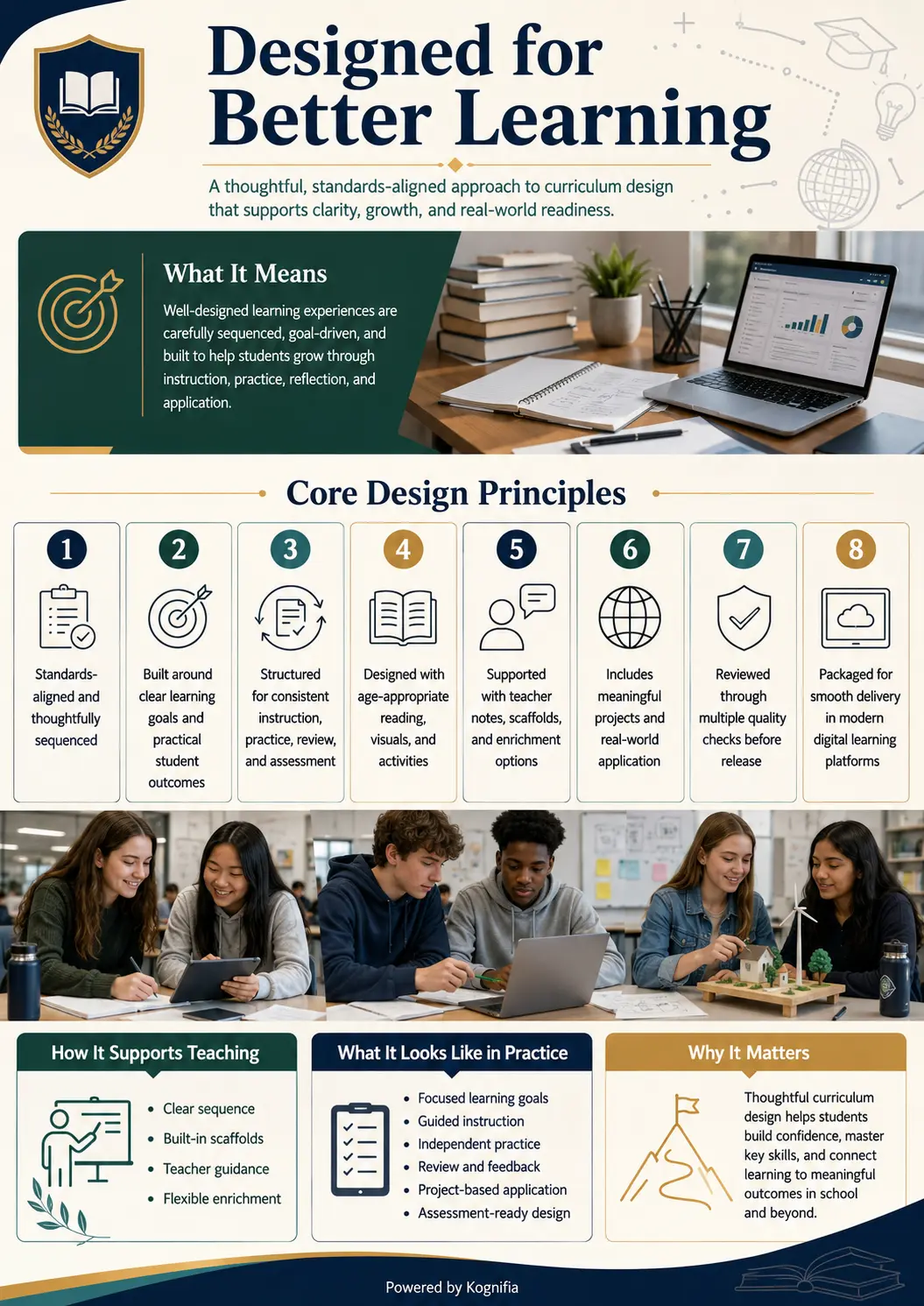
تنتقل الدروس من الشرح الواضح إلى التدريب والمراجعة والتقويم حتى لا يترك الطالب للتخمين.
تطلب المقررات من الطالب ربط الادعاءات بالأدلة والنماذج والتغذية الراجعة، وليس مجرد إكمال المهام.
تمنح أعمال نهاية الوحدة الطالب طريقة منظمة لتطبيق أفكار المقرر في صيغة عملية قابلة للمراجعة.
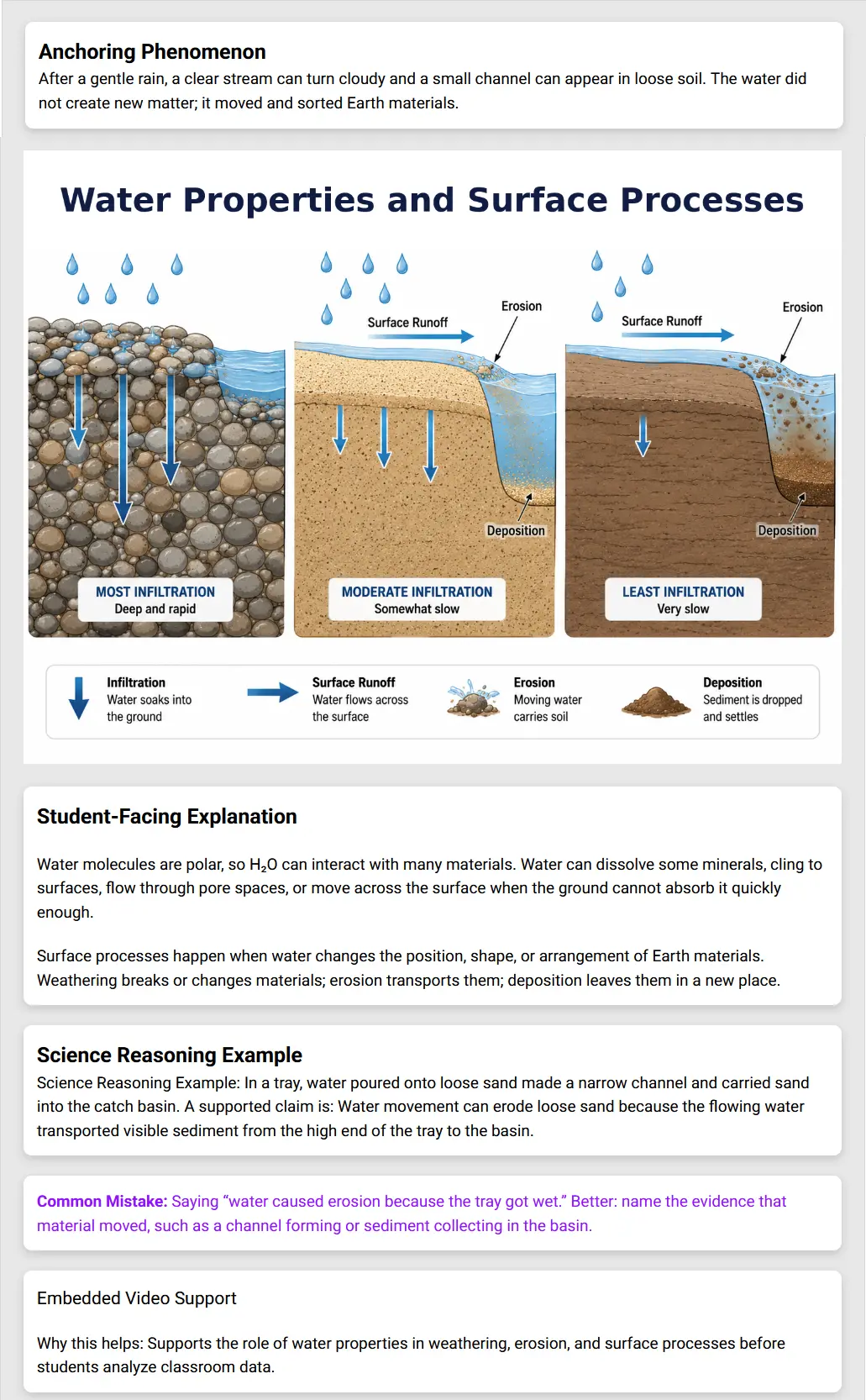
توضح هذه العينات كيف ينتقل المفهوم من الشرح إلى مشروع تطبيقي يتضمن بيانات وشرحا وتوقعات للرفع ومعيار تقييم.

الاعتماد
توفر RCA International مسارا تعليميا معتمدا عبر الإنترنت، مع مراجعة القبول والسجلات وخطة التخرج من خلال المدرسة.
الخطوة التالية
يساعد الاستفسار الأولي فريق RCA International على فهم وضع الطالب وتوجيهكم إلى الخطوة المناسبة.
موارد إيمانية
يمكن للطلاب والعائلات الراغبين في مشاهدة محتوى إيماني إضافي استكشاف هذه الموارد الخارجية. وهي ليست مقررات مطلوبة، أو حضورا إلزاميا، أو شرطا للقبول، أو نشاطا للاعتماد المزدوج.