
사전 구성된 학년 계획
적절한 학년을 선택하면 직원은 처음부터 맞춤 계획을 만들기보다 해당 학년의 정해진 계획으로 진행할 수 있습니다.
 Riviera Christian Academy InternationalRCA International온라인 입학
기대할 수 있는 것
입학 담당자는 지원 절차로 넘어가기 전에 희망 학년과 가족 상황을 검토합니다.
적절한 학년을 선택하면 직원은 처음부터 맞춤 계획을 만들기보다 해당 학년의 정해진 계획으로 진행할 수 있습니다.
계획에는 언어, 사회, 수학, 과학, 보건/체육, 배정되는 선택 과목이 포함됩니다.
풀타임 학년 계획이 맞지 않는 경우 가족은 특정 학년 과목 수강 가능성을 문의할 수 있으며, 입학 담당자가 먼저 적합성을 확인합니다.
3-8학년 학생에게 추가 학업 지원이 필요한 경우 튜터링 가능 여부를 문의할 수 있습니다.
이 경로는 적합한 가족 또는 승인된 상황에서 논의될 수 있으며 미국 내 가족만을 위한 것으로 가정하지 않습니다.
학년별 계획
공식 과목명은 필요에 따라 약어 또는 영어로 유지될 수 있으며, 입학 담당자가 적용 전에 적절한 배치를 확인합니다.
LA 3, SS 3, Math 3, Sci 3, Health 3/PE 3, Elective as assigned
LA 4, SS 4, Math 4, Sci 4, Health 4/PE 4, Elective as assigned
LA 5, SS 5, Math 5, Sci 5, Health 5/PE 5, Elective as assigned
LA 6, SS 6, Math 6, Sci 6, Health 6/PE 6, Elective as assigned
LA 7, SS 7, Math 7, Sci 7, Health 7/PE 7, Elective as assigned
LA 8, SS 8, Pre-Algebra, Sci 8, Health 8/PE 8, Elective as assigned
과목 안내
3-8학년은 학년별 계획을 사용하며, 입학 담당자가 배치와 적절한 지원 경로를 확인합니다.
가족은 지원 전 입학 담당자와 적절한 학년별 경로를 논의할 수 있습니다.
직원은 학생의 입학 학년을 선택하고 해당 학년에 정해진 학기당 6과목 계획으로 진행합니다.
학생은 학기당 6과목을 초과해 수강할 수 있으며, 추가 과목은 개별 과목 요금으로 청구됩니다.
풀타임 학년 계획이 맞지 않을 때 선택 학년 과목을 문의할 수 있으며, 입학 담당자가 배치와 과목 적합성을 먼저 확인합니다.
입학 담당자는 학년 배치와 선택한 경로가 학생에게 맞는지 확인합니다.
학년 배치는 입학 과정에서 확인되며, 카탈로그 항목은 학년별로 표시됩니다.
Grade 3 ELA A builds foundational upper-elementary reading habits through fluency, vocabulary, explicit comprehension work, evidence, discussion, and short writing practice. Students work with age-appropriate public-domain or owner-approved texts while learning to explain ideas clearly and prepare flexible projects.
Grade 3 ELA B extends third-grade reading, vocabulary, source listening/viewing, discussion, language, and writing routines through connected literary and informational work. Students continue building stamina with age-appropriate public-domain or owner-approved readings and teacher-supported projects.
Grade 3 Math A builds fluency with multiplication, division, place value, and early fraction reasoning through visual models, structured practice, and applied problem solving. Students use arrays, equal groups, number lines, diagrams, and data displays to explain mathematical thinking and prepare for later Grade 3 measurement and geometry work.
Grade 3 Math B extends Grade 3 multiplication, division, fraction, measurement, data, area, perimeter, and shape reasoning through visual models and applied projects. Students connect strategies to diagrams, equations, real-world contexts, and clear explanations.
Grade 3 Social Studies A begins a full-year Interdependence of Local and Regional Communities sequence focused on local and regional government, community responsibilities, geographic tools, Oregon and Pacific Northwest regions, and local history. Students use maps, photographs, short source excerpts, data displays, artifacts, and evidence-based explanations to connect communities, places, resources, and civic action.
Grade 3 Social Studies B continues a full-year Interdependence of Local and Regional Communities sequence focused on local and regional economies, Oregon industries and resources, community history, Pacific Northwest Tribal presence, source research, and informed action. Students use maps, timelines, public documents, short source excerpts, images, artifacts, and data to explain how communities are connected and how choices affect people and places.
Grade 3 Science A begins a full-year NGSS-aligned sequence focused on forces, motion, magnetic and electric interactions, life cycles, group behavior, traits, fossils, habitats, weather, climate, hazards, and engineering design. Students use Grade 3-appropriate observations, models, simple data displays, safe investigations, and claim-evidence-reasoning to explain phenomena and design solutions.
Grade 3 Science B continues the full-year NGSS-aligned Grade 3 science sequence with life science, Earth systems, weather and climate, hazards, and engineering design topics. Students use Grade 3-appropriate models, data, safe investigations, and claim-evidence-reasoning to connect evidence to science explanations.
Grade 3 Foundations of Health A builds practical health literacy through whole-person wellness, everyday health influences, body defenses, personal care, trusted help, safety, emergency readiness, and substance-use prevention. Students practice privacy-safe decision-making, communication, source use, and applied health projects.
Grade 3 Foundations of Health B continues practical health literacy through food safety, nutrition, movement, stress regulation, meaningful activities, healthy relationships, personal boundaries, trusted help, human uniqueness, growth, and age-appropriate body care.
Grade 3 PE A and B introduce physical literacy through safe movement, foundational motor skills, movement and fitness concepts, cooperation, and positive activity choices. Students practice accessible, age-appropriate activities, record progress in unit activity trackers, and begin working toward Oregon's Grades 3-5 physical education outcomes.
Grade 3 PE B continues development of safe movement, foundational motor-skill combinations, movement and fitness concepts, cooperation, and personal activity choices. Students practice accessible activities, record progress in unit activity trackers, and continue working toward Oregon's Grades 3-5 physical education outcomes.
Grade 4 ELA A builds upper-elementary reading habits through close reading, vocabulary, text structure, evidence, discussion, and short writing practice. Students work with age-appropriate public-domain or owner-approved texts and flexible projects that develop confidence with literary and informational evidence.
Grade 4 ELA B extends Grade 4 reading, vocabulary, research, discussion, and writing skills through paired texts, multimedia connections, source use, and revision practice. Students continue building stamina with age-appropriate public-domain or owner-approved readings and end-of-unit projects.
Grade 4 Math A develops place-value reasoning through one million, multi-digit addition and subtraction, multiplicative comparison, multi-digit multiplication, division strategies, factors, multiples, patterns, and multistep area/perimeter problem solving. Students use visual models, equations, step-by-step reasoning, and applied projects to build fluency and explain their thinking.
Grade 4 Math B extends Grade 4 work into fraction operations, decimals to hundredths, measurement conversion, angle measurement, line plots, and geometry. Students solve applied problems, interpret visual models, and explain mathematical choices with grade-appropriate precision.
Grade 4 Social Studies A begins a full-year Oregon History and Region Studies sequence focused on Oregon geography, Native Nations and tribal sovereignty, early Oregon history, and the relationship between people, land, and government. Students use maps, timelines, primary and secondary excerpts, images, artifacts, charts, and evidence-based explanations to study Oregon communities and regions.
Grade 4 Social Studies B continues a full-year Oregon History and Region Studies sequence focused on Oregon statehood, migration, economic change, infrastructure, civic choices, and the continuing experiences of Oregon communities and sovereign Tribal Nations. Students use maps, timelines, public documents, source excerpts, data, images, and evidence-based explanations to connect history, civics, geography, and economics.
Grade 4 Science A begins a full-year NGSS-aligned sequence focused on energy, collisions, energy transfer, device design, waves, light, information transfer, and early Earth evidence. Students use observations, models, safe investigations, maps and data, and engineering design choices to explain grade-appropriate science phenomena.
Grade 4 Science B continues the full-year NGSS-aligned sequence with plant and animal structures, senses and responses, weathering and erosion, Earth-feature maps, natural resources, hazards, and engineering design. Students explain phenomena with evidence, compare solutions, and build projects using models, data, and claim-evidence-reasoning.
Grade 4 Foundations of Health A builds practical health literacy through wellness choices, sleep, valid information, safety, substance-use prevention, medicine literacy, decision-making, and help-seeking. Students use fictional scenarios, supported practice, and applied projects while developing communication, goal-setting, and resource-evaluation skills.
Grade 4 Foundations of Health B continues practical health literacy through nutrition, food access, digestion, coping, respectful communication, personal boundaries, bullying and abuse prevention, age-appropriate growth, body care, and trusted support.
Grade 4 PE A and B build physical literacy through safe movement, motor-skill development, movement and fitness concepts, cooperation, and personal goal setting. Students practice accessible, age-appropriate activities, record progress in unit activity trackers, and work toward Oregon's Grades 3-5 physical education outcomes at an appropriate Grade 4 level.
Grade 4 PE B continues development of safe movement, motor-skill combinations, movement and fitness concepts, cooperation, and personal activity choices. Students practice accessible activities, record progress in unit activity trackers, and continue working toward Oregon's Grades 3-5 physical education outcomes at an appropriate Grade 4 level.
Grade 5 ELA A builds upper-elementary reading habits through evidence, inference, vocabulary, theme, informational structure, and literary craft. Students practice discussion, short responses, and flexible file-upload projects using public-domain or owner-approved texts that fit fifth-grade stamina.
Grade 5 ELA B extends research, multimedia comparison, collaborative discussion, conventions, and same-genre literary comparison. Students continue building independent reading stamina and evidence-based communication through age-appropriate texts, structured practice, and projects.
Grade 5 Math A develops place-value reasoning, operations, fraction concepts, decimal understanding, measurement, and problem-solving habits. Students use visual models, practice, and projects to strengthen fifth-grade mathematical fluency and explanation.
Grade 5 Math B extends fraction operations, decimal operations, geometry, measurement, volume, graphing, and year-end modeling. Students apply fifth-grade math skills through structured practice, assessment, and project-based problem solving.
Grade 5 Science A builds science routines while exploring matter, particles, conservation, mixtures, gravity, plants, ecosystems, and Earth systems. Students use observations, models, data, and design tasks to explain grade-level science phenomena.
Grade 5 Science B extends ecosystem matter movement, Earth systems, water resources, sky patterns, resource protection, and fair-test design. Students analyze evidence and compare solutions through age-appropriate investigations, models, and projects.
Grade 5 Social Studies A begins a full-year Early United States History sequence focused on Indigenous societies, early North American geography, exploration, colonization, and source-based historical thinking. Students use maps, timelines, primary and secondary excerpts, images, artifacts, charts, and evidence-based explanations to study people, places, systems, and choices before and during early colonization.
Grade 5 Social Studies B continues a full-year Early United States History sequence focused on colonial society, trade and slavery, self-government, founding documents, and the causes and consequences of the American Revolution. Students use maps, timelines, primary and secondary excerpts, images, artifacts, charts, and evidence-based explanations to connect civics, geography, economics, and historical argument.
Grade 5 Foundations of Health A builds practical health literacy through whole-person wellness, vaccines, media literacy, safety, first aid, digital safety, medicine literacy, substance-use prevention, communication, and valid-resource use. Students practice privacy-safe decision-making, goal-setting, support access, and applied health projects.
Grade 5 Foundations of Health B continues practical health literacy through nutrition, movement, body systems, coping, belonging, respectful relationships, personal boundaries, protection, growth, body care, genetics, prevention, and reliable information.
Grade 6 ELA A builds evidence-based reading, vocabulary, literary analysis, informational-text analysis, point of view, argument, listening, and introductory writing skills. Students use public-domain or owner-approved texts, guided practice, knowledge checks, and flexible file-upload projects to develop sixth-grade reading stamina.
Grade 6 ELA B extends research, media comparison, genre comparison, language conventions, discussion, presentation, and grade-band reading stamina. Students work with public-domain or owner-approved texts, structured practice, knowledge checks, and flexible file-upload projects.
Grade 6 Math A develops number fluency, factors, fraction division, ratios, percents, measurement, expressions, equations, inequalities, and quantitative relationships. Students build middle-school mathematical reasoning through practice, modeling, and clear explanations.
Grade 6 Math B extends rational numbers, coordinate-plane reasoning, area, volume, surface area, statistics, data displays, and distribution summaries. Students apply sixth-grade reasoning to models, assessments, and capstone problem-solving tasks.
Grade 6 Science A introduces invisible matter models, particle motion, reactions, thermal transfer, Earth materials, surface change, and Earth-Sun-Moon patterns. Students use models, investigations, data, and design challenges to explain middle-school science phenomena.
Grade 6 Science B extends climate patterns, resources, hazards, cells, ecosystems, matter and energy flow, ecosystem change, and biodiversity design. Students apply evidence-based reasoning to compare explanations, evaluate risks, and propose solutions.
Grade 6 Social Studies A begins a full-year world history and geography sequence focused on early civilizations, geography, government, economics, and source-based historical thinking. Students use maps, timelines, artifacts, documents, and evidence-based explanations to study ancient and classical societies across world regions.
Grade 6 Social Studies B continues the world history and geography sequence through additional ancient and classical civilizations, trade networks, government systems, economic patterns, and cross-regional connections. Students use source sets, maps, timelines, artifacts, and historical explanations to compare societies and explain change over time.
Grade 6 Foundations of Health A builds practical health literacy through whole-person wellness, prevention, safety, nutrition, movement, substance-use prevention, decision-making, communication, and valid-resource use.
Grade 6 Foundations of Health B continues practical health literacy through mental health, resilience, digital wellness, respectful communication, non-romantic boundaries, bullying prevention, body respect, family support, healthy routines, resource access, and advocacy.
Grade 7 ELA A strengthens close reading, objective evidence, theme, informational structure, poetry, drama, point of view, argument, research, and multimedia comparison. Students build seventh-grade reading stamina with public-domain or owner-approved texts, teacher-supported practice, and flexible projects.
Grade 7 ELA B continues research, multimedia analysis, literature in historical context, conventions, sentence variety, collaborative discussion, and year-end synthesis. Students apply evidence-based reading and communication skills through age-appropriate texts, practice tasks, and projects.
Grade 7 Math A develops unit rates, proportional relationships, percent applications, rational-number operations, expressions, equations, inequalities, and scale drawings. Students connect calculations, tables, graphs, and contexts through practice and modeling projects.
Grade 7 Math B extends equations, proportional geometry, angle relationships, circles, area, volume, surface area, sampling, inference, and probability. Students use mathematical models and data to reason, explain, and solve multistep problems.
Grade 7 Science A develops life-science understanding of body systems, cells, photosynthesis, food molecules, reproduction, inheritance, genes, mutations, fossils, and evidence for relationships. Students use models, data, and explanations to connect organism structure, function, and heredity.
Grade 7 Science B extends natural selection, geologic time, climate evidence, forces, motion, gravity, stored energy, kinetic energy, and design. Students interpret evidence, build models, and evaluate solutions across life, Earth, and physical science contexts.
Grade 7 Social Studies A begins a world geography and global issues sequence focused on regions, government systems, migration, resources, trade, and contemporary challenges. Students use maps, data, source sets, and evidence-based reasoning to explain how people, places, economies, and civic systems are connected.
Grade 7 Social Studies B continues the world geography and global issues sequence through regional case studies, global systems, sustainability, conflict, cooperation, and civic/economic decision-making. Students use maps, data, source sets, and evidence-based reasoning to explain contemporary global connections.
Grade 7 Foundations of Health A builds practical health literacy through whole-person wellness, prevention, nutrition, safety, digital safety, substance-use prevention, decision-making, communication, and valid-resource use.
Grade 7 Foundations of Health B continues practical health literacy through mental health, resilience, media literacy, body image, respectful communication, non-romantic boundaries, violence prevention, support resources, wellness planning, and advocacy.
Grade 8 ELA A develops strong textual evidence, theme analysis, informational connections, figurative language, point of view, argument revision, research, and media comparison. Students prepare for high-school reading expectations through public-domain or owner-approved texts, structured practice, and flexible projects.
Grade 8 ELA B extends research, multimedia choices, traditional-source adaptation, grammar, style, discussion, and year-end synthesis. Students build sustained reading stamina and evidence-based writing habits through age-appropriate texts, practice, and projects.
Pre-Algebra A develops real-number reasoning, exponents, scientific notation, proportional relationships, linear equations, functions, systems, and introductory transformations. Students prepare for Algebra I by connecting symbolic, graphical, numerical, and contextual representations.
Pre-Algebra B extends transformations, similarity, angle relationships, the Pythagorean theorem, volume, scatter plots, association, and two-way tables. Students strengthen readiness for Algebra I through geometry, data, modeling, and explanation.
Grade 8 Science A develops particle models, chemical reactions, designed materials, thermal energy, electric and magnetic fields, Earth-Sun-Moon patterns, gravity, waves, and digital signals. Students use models, data, and design reasoning to explain physical and Earth-space phenomena.
Grade 8 Science B extends gravity, waves, Earth materials, weather, climate, natural resources, hazards, and human impacts. Students analyze evidence, compare models, and design solutions for Earth and physical science problems.
Grade 8 Social Studies A launches a full-year United States history and civics sequence from the Revolution through Reconstruction. Students use documents, maps, timelines, images, data, and evidence-based explanations to study founding ideals, rights, federalism, expansion, slavery, war, and Reconstruction.
Grade 8 Social Studies B continues the Grade 8 United States history and civics sequence through expansion, reform, sectional conflict, the Civil War, and Reconstruction. Students use primary and secondary sources, maps, data, and civic reasoning to explain change, conflict, rights, and unresolved questions in U.S. history.
Grade 8 Foundations of Health A builds practical health literacy through wellness, prevention, healthcare access, safety, food systems, body image, media literacy, substance-use prevention, and valid-resource use.
Grade 8 Foundations of Health B continues practical health literacy through overdose prevention, mental health, social media, personal boundaries, bullying prevention, coercion warning signs, trafficking awareness, trusted resources, and advocacy.
Grade 5 Digital Citizenship builds healthy technology habits, privacy and account-safety skills, responsible sharing, and respectful online communication. Students evaluate information, advertising, and AI-generated media, respect creators, and practice thoughtful digital choices through fictional scenarios without needing personal accounts or public posting.
Grade 6 Computer Science introduces digital systems, networks, data representation, algorithms, visual programming, interface design, solution evaluation, privacy, and secure collaboration. Students design, build, test, explain, and improve age-appropriate digital solutions through accessible tools and increasingly independent projects.
Grade 6 STEM is a one-term project-based elective in which students define problems, build and test models, analyze evidence, and improve solutions. Students connect science, technology, engineering, and mathematics through safe, practical design challenges using accessible materials and data.
Grade 8 Game Design develops original playable games through goals, rules, meaningful choices, prototypes, and structured playtesting. Students investigate balance, trace game states and rule logic, improve instructions and accessibility, and use test evidence to revise a game and explain their design decisions with safe, everyday materials.
Grade 5 Art develops observation and creative expression through drawing, composition, color, light and dark, texture, collage, and three-dimensional construction. Students explore how art communicates stories and ideas, work with safe everyday materials, and revise and explain a portfolio of their own artwork.
Grade 6 Digital Arts develops visual communication and digital storytelling through images, sound, text, interactive elements, production processes, critique, and presentation. Students analyze media choices, create and revise original works for specific audiences, and practice responsible media creation with accessible tools.
Grade 7 Journalism introduces news judgment, fair questioning, interviewing, accurate note-taking, fact-checking, and clear news and feature writing. Students consider ethical headlines, images, and captions, then edit a small publication with source credits and documented revisions. Supplied reporting simulations support learning without required public posting or contact with strangers.
Grade 6 Leadership develops responsible influence through self-management, communication, empathy, collaboration, critical thinking, flexibility, and reflective improvement. Students practice leading themselves and teams through age-appropriate scenarios, shared decisions, constructive feedback, and a practical community-improvement project without required personal disclosure.
Grade 7 Careers helps students explore developing interests and strengths, investigate work roles using evidence, and compare education and training pathways. Students practice communication, collaboration, and problem-solving, then build a flexible exploration plan without needing to commit to a single career.
Grade 8 Virtual Business explores customer needs, business ideas, market evidence, costs, pricing, budgets, and responsible promotion through simulated business decisions. Students plan operations, respond to customer-service challenges, track results, and improve their decisions using evidence while considering ethical choices and practical trade-offs.
과목 목록은 RCA International의 현재 커리큘럼 카탈로그를 기준으로 유지됩니다. 개설 여부, 배치, 자격은 입학 과정에서 확인됩니다.
커리큘럼 설계
3-8학년 과목도 같은 설계 방식을 사용합니다. 명확한 설명, 연령에 맞는 모델, 단계별 사고 활동, 그리고 어린 학생이 이해한 내용을 보여 줄 수 있는 프로젝트로 구성됩니다.
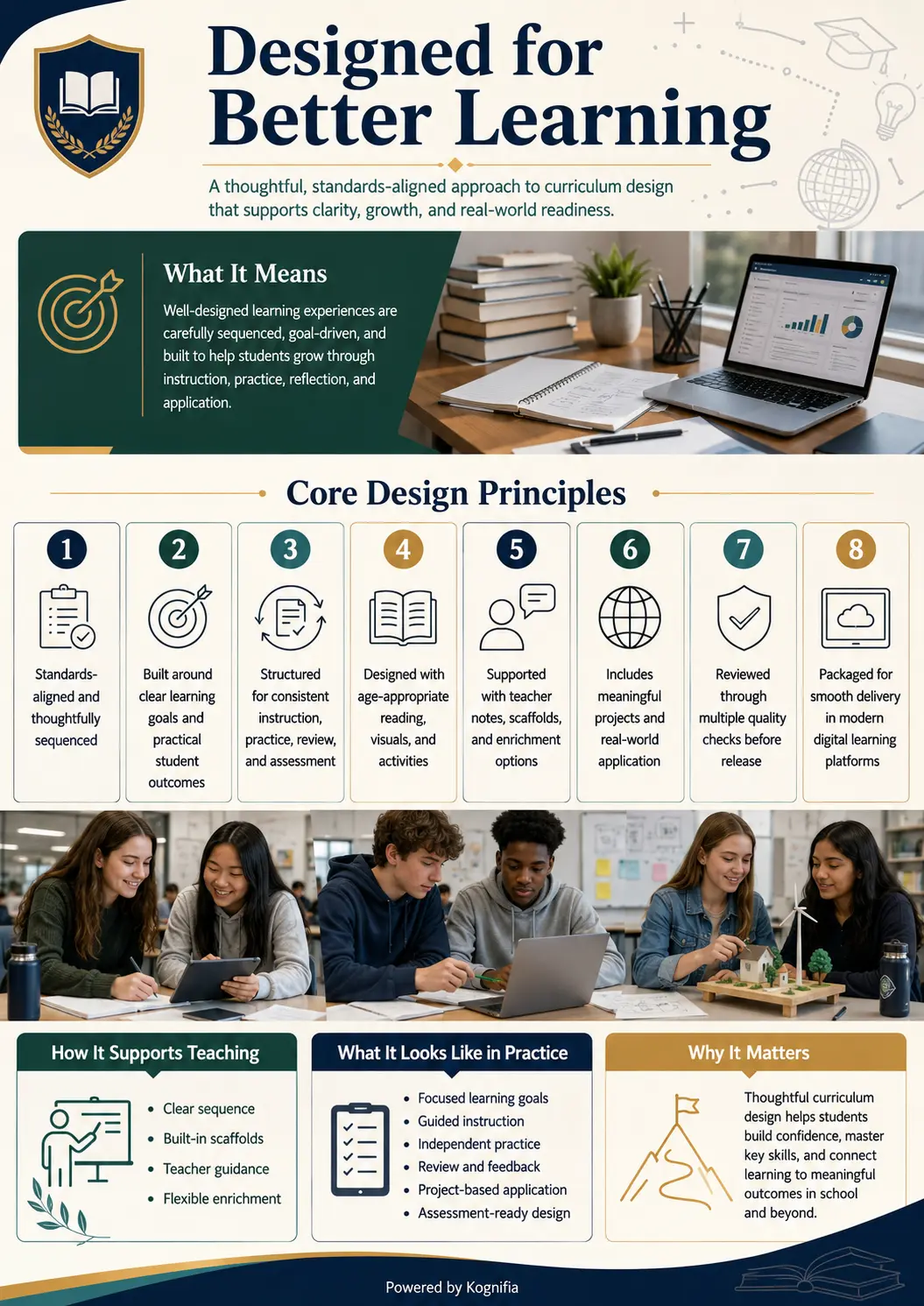
수업은 명확한 설명에서 연습, 복습, 평가로 이어져 학생이 무엇을 해야 하는지 알 수 있게 합니다.
과목 활동은 단순한 과제 완료가 아니라 주장, 근거, 모델, 피드백을 연결하도록 돕습니다.
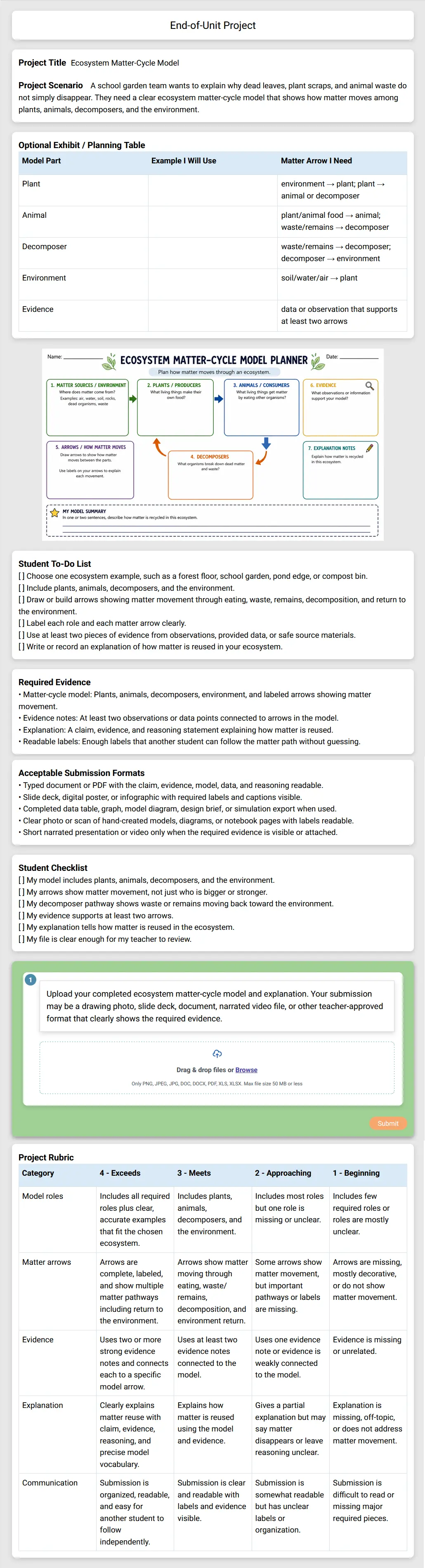
단원 말 프로젝트는 배운 개념을 구체적이고 검토 가능한 형태로 적용할 수 있게 합니다.
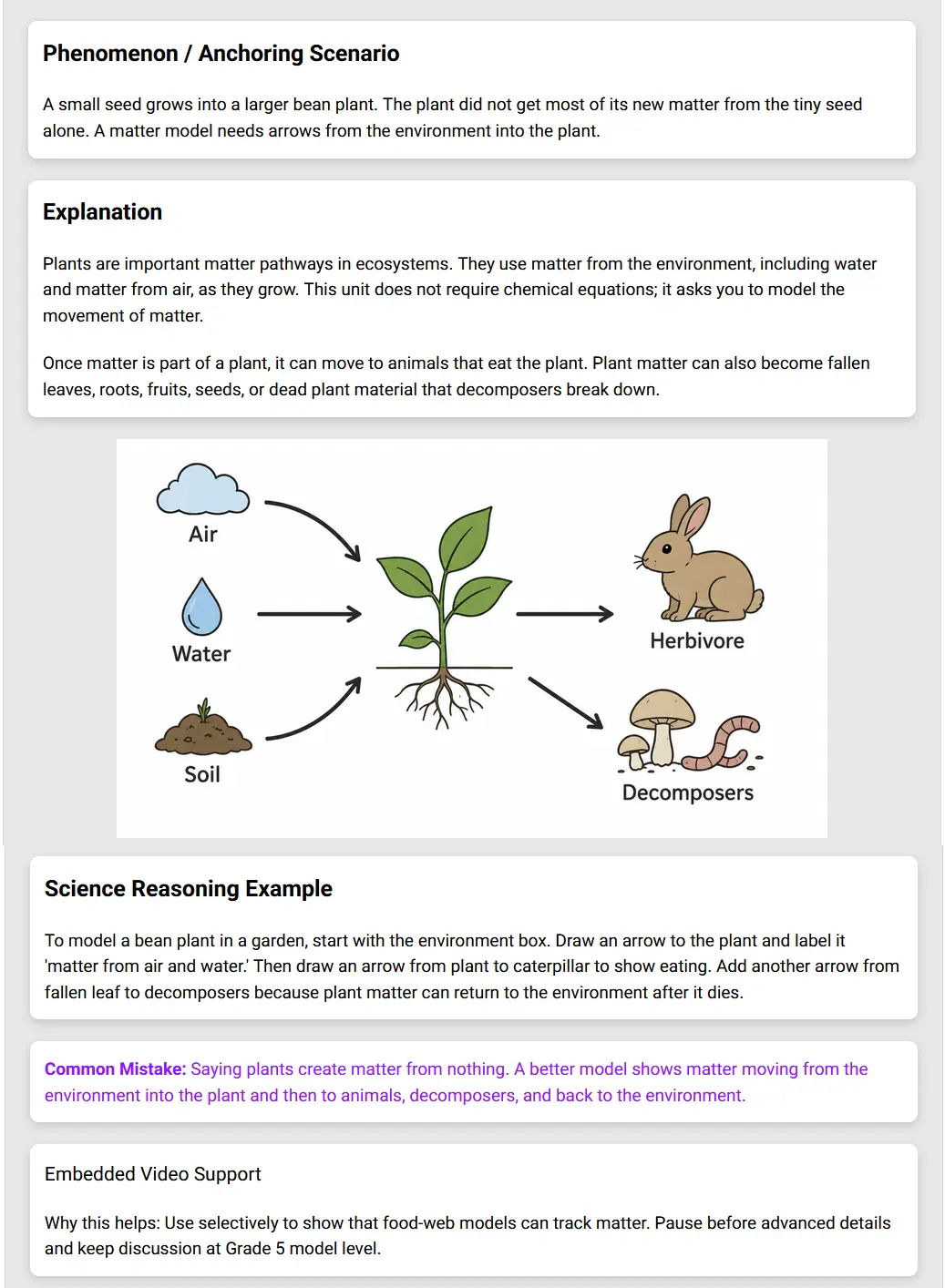
이 과목 예시는 하나의 개념이 설명에서 데이터, 해설, 제출 기준, 루브릭이 포함된 적용 프로젝트로 이어지는 흐름을 보여 줍니다.
시작 방법
가족은 논의하고 싶은 학년 또는 학년 범위를 알려 줍니다.
RCA International 직원이 적합성, 일정, 학생 수준을 논의합니다.
경로는 풀타임, 하이브리드, 또는 추가 검토가 필요한 형태일 수 있습니다.
다음 단계가 적절하면 직원이 가족을 입학 포털로 안내합니다.
다음 단계
짧은 문의로 시작하면 입학 담당자가 학생에게 맞는 경로를 안내할 수 있습니다.