

Choosing an online school for a student in grades 3-8 involves different questions than choosing a high school diploma program. Families need to think about grade placement, daily routines, age-appropriate independence, parent involvement, course fit, and the kind of support the student may need.
RCA International offers online school options for students entering grades 3 through 8. The process begins with an inquiry and an admissions conversation so staff can understand the student’s current grade, learning context, expected timing, and whether a full-time, hybrid, or other approved path may fit.
Start With Grade Placement
A family may already know the grade it expects the student to enter, but admissions still confirms placement before the application path is finalized. The conversation may consider the student’s age, current or most recently completed grade, school history, and the timing of the proposed start.
Placement is not something a family needs to settle alone before asking a question. The inquiry form lets the family identify the grade it wants to explore. RCA International staff can then discuss whether that choice matches the available information or whether more context is needed.
If records or other documents become necessary, staff can request them through the secure admissions portal. Families should not send sensitive student records through the public inquiry or contact forms.
Understand the Full-Time Grade-Level Plan
RCA International uses established grade-level plans for grades 3-8. Once the entry grade is confirmed, staff can continue with the plan for that grade instead of creating an unrelated group of courses from the beginning.
A full-time grade-level plan is based on 6 courses per semester. It generally includes the following areas:
- Language arts
- Social studies
- Mathematics
- Science
- Health or physical education
- An elective as assigned
The exact course names and sequence depend on the student’s grade and confirmed placement. Students may take more than 6 courses per semester, and additional courses are charged at the individual course rate. Families should discuss workload and fit with admissions before adding courses.
Ask About Hybrid Enrollment When Appropriate
Some families want a complete online grade-level plan. Others may be looking for selected courses to complement another approved learning arrangement.
RCA International can discuss hybrid enrollment when a full-time plan is not the right fit. A hybrid conversation should identify which subject or subjects the family is considering, what the student is doing elsewhere, and how the selected course would fit the student’s overall learning context.
Course availability does not by itself confirm placement or enrollment. Admissions staff first review the situation, then explain the appropriate application and tuition path. Individual, hybrid, or custom standard courses are priced per course, per term or semester, in U.S. dollars.
Expect Family Involvement
Students in grades 3-8 are still developing organization, time awareness, communication habits, and independent learning skills. Online school gives families flexibility, but younger students should not be expected to manage the entire experience without adult attention.
Parents or guardians should be prepared to:
- Help establish a consistent school-day routine
- Make sure the student has a suitable device and internet connection
- Provide a quiet, workable learning space
- Check that assignments and communications are not being missed
- Encourage the student to ask questions when something is unclear
- Communicate with the school when pacing or support needs attention
The amount of daily assistance may differ by age, course, and student. The goal is not for the parent to complete the work. It is to provide enough structure for the student to participate honestly and build greater independence over time.
Look for Clear, Age-Appropriate Course Design
Online learning should give students more than a list of tasks. RCA International grades 3-8 courses are designed around clear learning goals, direct explanation, guided practice, age-appropriate models, reasoning, review, and projects that let students demonstrate understanding.
Course work can move from instruction into an applied activity with data, explanation, upload expectations, and a rubric. Younger students may still need an adult to help them interpret directions, organize a file, or remember a deadline, but the student’s thinking and submitted work should remain the student’s own.
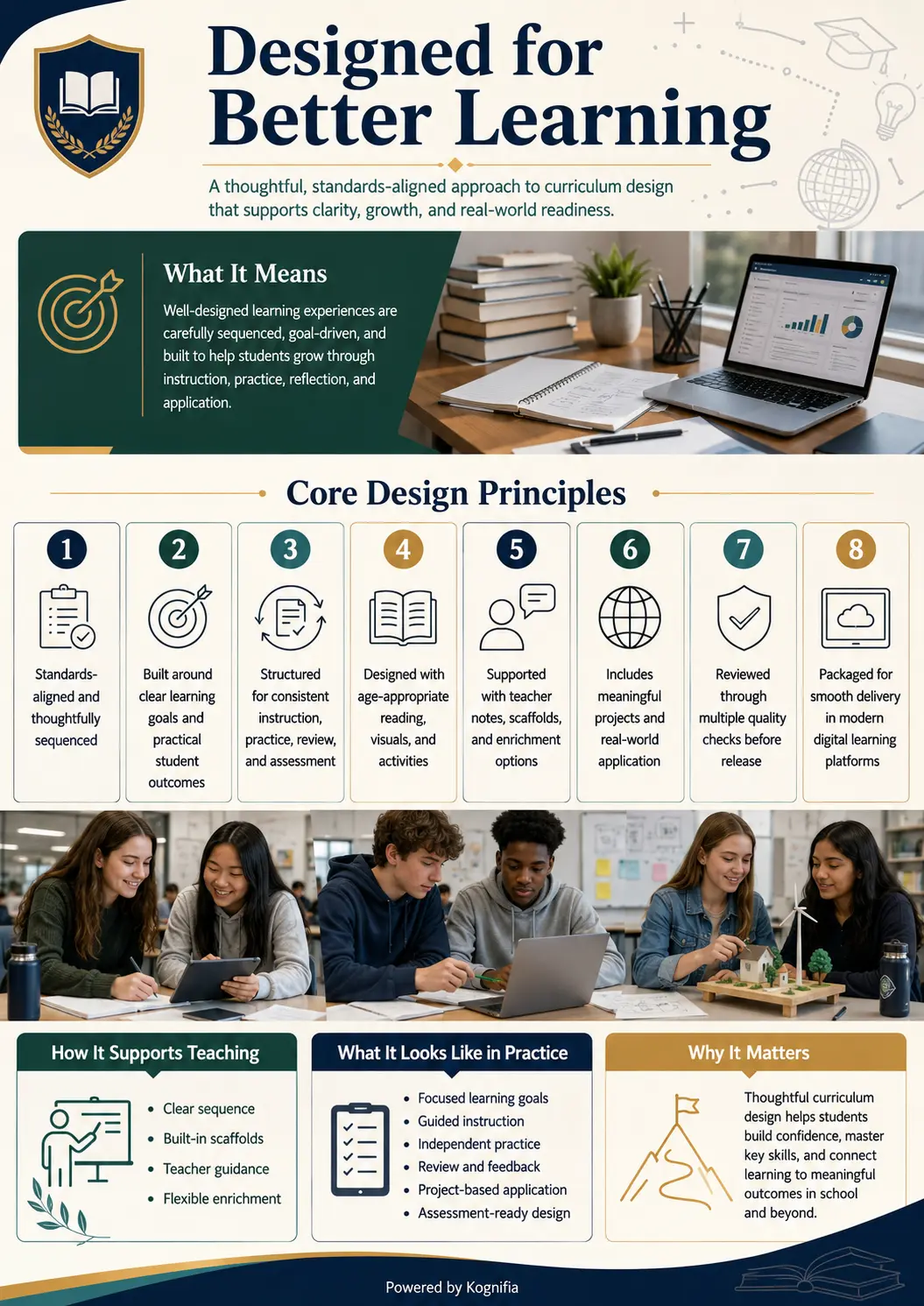
Families should ask practical questions about the learning experience:
- How is a new concept explained?
- What guided practice happens before independent work?
- How does the student show reasoning, not just select an answer?
- What does an end-of-unit project require?
- How will the family know when the student needs help?
Build a Sustainable Weekly Routine
Flexibility works best when the family gives it structure. A student should know when the school day begins, which subjects are planned, when breaks occur, and where questions or unfinished work are recorded.
A workable routine may include short planning time at the beginning of the day, focused course blocks, movement or meal breaks, and a brief parent check near the end. The exact schedule can vary, but changing it constantly can make it harder for a younger student to develop dependable habits.
Families should also consider other commitments. Sports, appointments, travel, local classes, and family responsibilities may all affect the week. Those activities should be planned around realistic study time instead of assuming that online work will simply fit into whatever time remains.
Discuss Support Before It Becomes Urgent
Some students need help adjusting to online learning, strengthening a subject area, or organizing multi-step assignments. Families can ask admissions about tutoring availability when additional academic support may be appropriate.
Tutoring availability can depend on the student’s path and needs. It should be discussed as a possible support, not assumed as an automatic part of every enrollment. Parents should also communicate early when a student is falling behind, avoiding work, or repeatedly struggling with directions.
Know What Grades 3-8 Enrollment Is Not
Grades 3-8 enrollment is not a high school diploma path. The 24-credit graduation requirement applies to high school, not to an elementary or middle school grade-level plan.
Families should also avoid assuming that selecting a grade on an inquiry guarantees placement or admission. Inquiry, admissions review, application, and the school’s decision remain separate steps.
For families outside the United States, RCA International online enrollment is not a U.S. visa, immigration, relocation, or permission-to-enter program. Students participate online from where they live, subject to admissions review and the family’s responsibility to determine whether the arrangement fits their local circumstances.
Questions to Ask Before Applying
An admissions conversation is more useful when a family brings specific questions:
- Which grade should we explore based on the student’s recent schooling?
- Would a full-time 6-course plan or a hybrid path better fit our situation?
- What device, internet access, and daily adult support will be needed?
- How should we structure the student’s week?
- Are any records needed before placement is confirmed?
- What tuition path applies to the proposed plan?
- Should we discuss tutoring or another support before the student begins?
Families do not need to have every answer before reaching out. A short inquiry gives RCA International enough context to begin the conversation, confirm the appropriate grade-level path, and explain the next admissions step.